
Webster Parish Criminal Court Cases
The Twenty-Sixth Judicial District Court has original civil and criminal jurisdiction in Webster and Bossier Parishes. Its Webster Parish courtrooms handle felonies and other district-level criminal matters. The Webster Parish Clerk of Court keeps the pleadings, minutes, judgments, and other filed records. The district attorney prosecutes the charges. Judges hear cases, but chambers is not a record-search counter.
Minden and Springhill city courts keep their own limited-jurisdiction files. A city-court bench warrant may not appear in the Webster Parish district file. Juvenile records are generally confidential. Federal cases, appeals, and the Louisiana State Police criminal-history repository also belong to separate systems.
The official Webster Parish court calendar shows the setting framework for courtrooms A, B, and C.
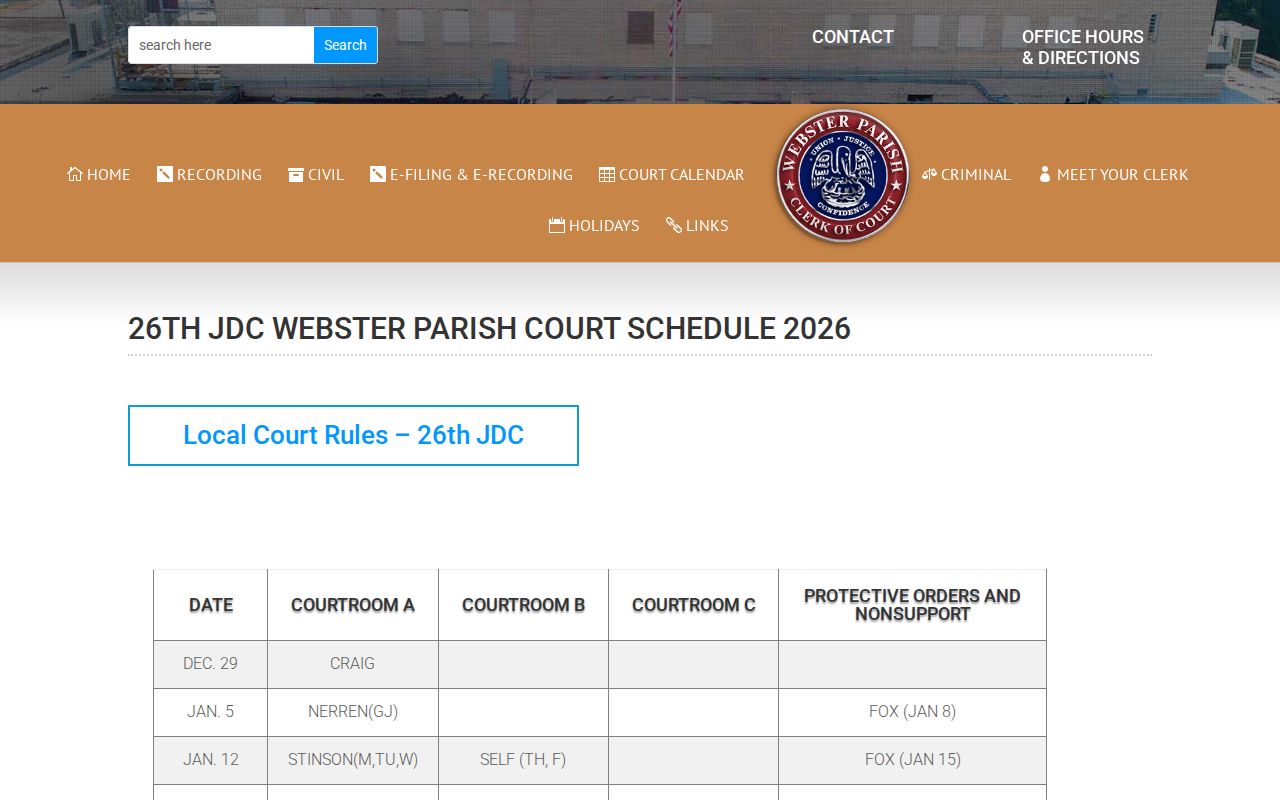
A calendar can confirm where and when a session is set, but it is not a complete name-based criminal case index.
Webster Parish Clerk Search
The clerk's verified criminal channel is a Request for Criminal Background Search. It covers ten years and costs $20 per name. The form says a date of birth, address, or last four Social Security number digits may help distinguish people. Those details belong only on the private request.
Mail or deliver the form with payment, or email it to webstercriminal@yahoo.com and call to pay by card. The printed form also gives a PayPal address. Results may return by mail, email, or a call for pickup. It does not state turnaround time, certification, or archive coverage beyond ten years.
When a search is older than the printed range, give the Criminal Department the best date span available and ask whether a paper index or archive must be checked. Requesters should also ask whether the $20 result is only a name-search response or whether copies of pleadings and judgment must be ordered on their own. The clerk's civil and recording pages publish department-specific copy prices, but those figures are not verified criminal-copy charges. A call before payment avoids applying the wrong schedule.
Webster Parish Clerk of Court
410 Main Street
Minden, LA 71055
318-371-0366
Monday-Friday, 8:30 a.m.-4:30 p.m.
Searching Webster Parish Case Records
Start with the narrowest official channel that fits the court level and date. A matching name is only a lead. Confirm identity and outcome against the filed record.
- Use the clerk's ten-year criminal search when no docket number is known.
- Contact the Criminal Department about older files, archive indexes, and current copy fees.
- Check the court calendar and district attorney docket index for a known date or judge.
- Match the case number, statute, dates, and lawful identifiers before accepting a match.
- Request the filed disposition or certified judgment from the clerk to confirm the outcome.
| Request Field | Use | Status | Notes |
|---|---|---|---|
| Name | Text | Functionally required | One $20 search per name. |
| DOB or address | Matching aid | If available | Helps separate common names. |
| Return method | Checkbox | Needed | Mail, email, or call for pickup. |
| Contact details | Text | Conditional | Complete the fields needed for the chosen return route. |
The ClerkNet landing page advertises civil cases, dockets, minutes, and document purchases, but its public records table does not list criminal records.
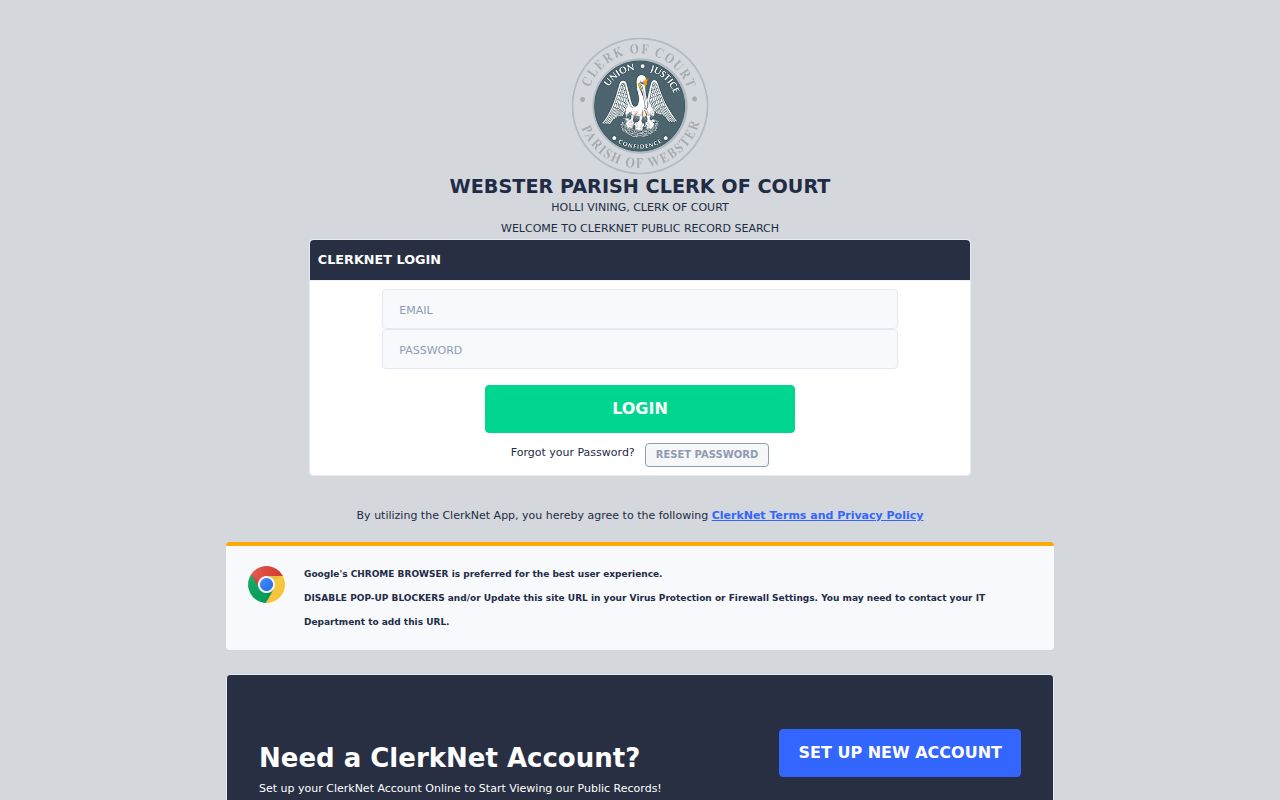
The separate ten-year form remains the verified criminal-specific name-search path.
ClerkNet offers 24-hour, monthly, and yearly subscriptions, yet the public page does not expose current subscription prices or promise access to a criminal index. Its advertised civil docket and minute access should not be stretched into a claim about Webster Parish criminal court cases. The criminal request form and a direct call to the clerk provide a clearer chain when a party name is known but the docket number is not.
Webster Parish Docket Limits
The district attorney's Webster docket index organizes posted files by date and judge. It can locate a near-term setting, but a docket listing is not a verdict and settings may change.
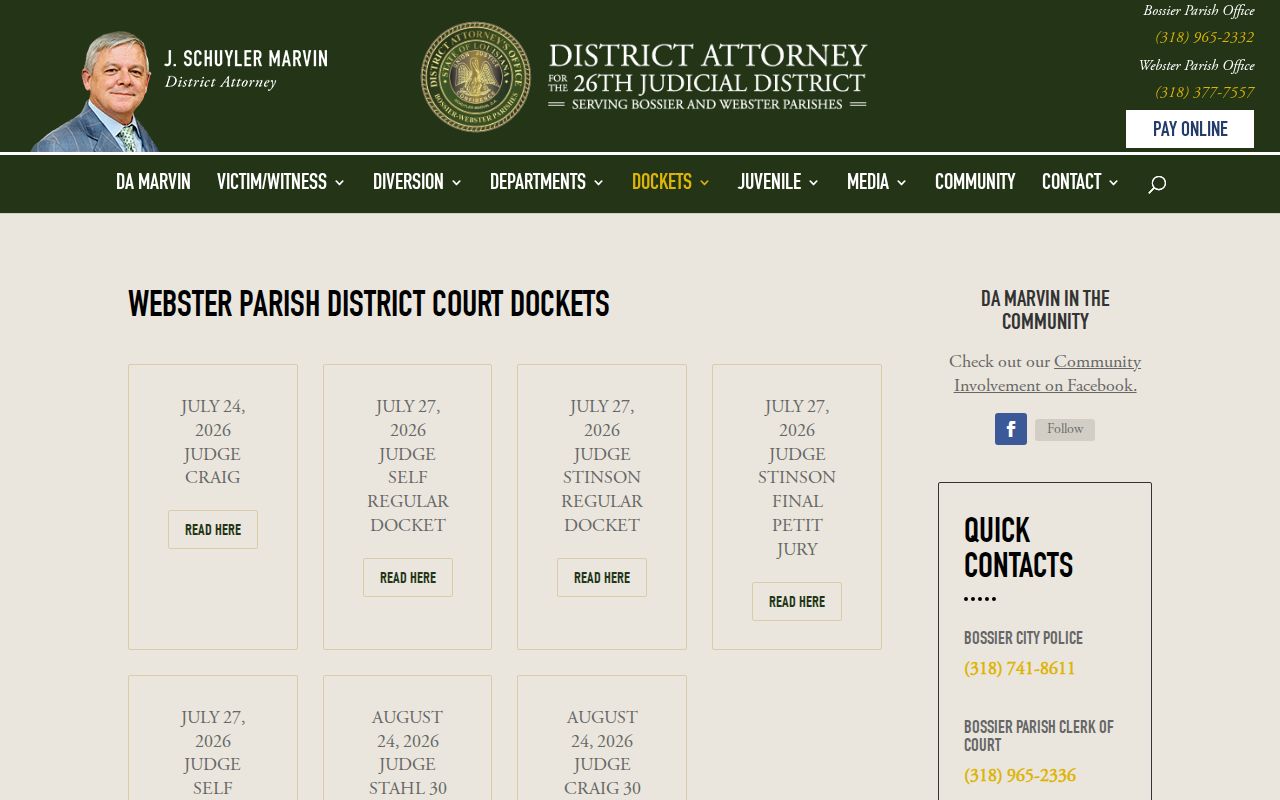
Use the index for date and court context, then obtain the filed minutes or disposition from the clerk. Never treat a booking charge, docket setting, and final judgment as interchangeable.
A useful match checks more than a shared name. Compare the case number, the court, filing and arrest dates, the cited offense, and any date of birth lawfully supplied through the private request channel. Common names and amended charges can produce false assumptions. If the docket shows only a future hearing, wait for or request the later minute entry before stating that the matter had a final outcome.
Inside a Webster Parish Case File
A Webster Parish criminal case file records the court process, not just the arrest. Read its fields together because the initial charge may be amended, dismissed, or resolved under a different statute.
| Case Number & Court | The clerk identifier and court with jurisdiction. |
|---|---|
| Charging Document | The filed accusation, which may differ from booking. |
| Docket Entries | Filed events, motions, settings, and minute references. |
| Hearing Dates | Arraignment, pretrial, motion, plea, and trial settings. |
| Disposition & Judgment | The outcome, such as dismissal, plea, acquittal, or conviction. |
| Sentence & Conditions | The penalty and terms, including probation when ordered. |
Pending Webster Parish Cases
The 26th JDC FAQ says judges may not speak privately with litigants about pending cases. A communication about a pending criminal matter must be a written motion filed with the clerk, with notice to the district attorney, probation office, drug court office, and other interested parties.
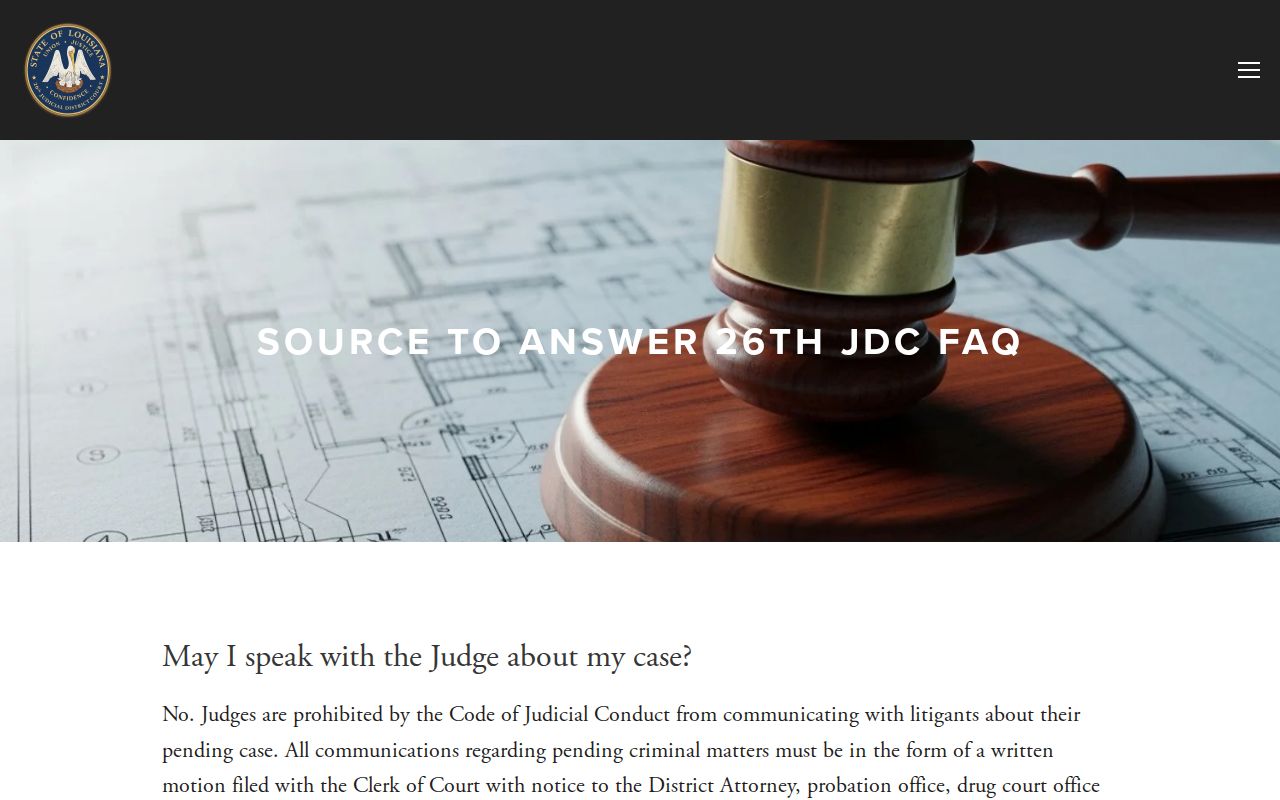
Staff attorneys and law clerks also cannot give legal advice. Use the clerk for records and filing procedure, not a private call to chambers.
How a Criminal Case Moves
An arrest or citation may lead to a prosecutor's charging decision. The clerk opens the filed case. Arraignment records a plea. Motions and pretrial hearings address legal issues. A plea or trial may lead to judgment and sentence, followed in some cases by an appeal or post-conviction filing.
Case flow: Arrest or Citation › Charging Decision › Arraignment › Pretrial Proceedings › Plea or Trial › Sentencing
Louisiana defines a felony by possible death or imprisonment at hard labor. Other crimes are misdemeanors. The state does not use one broad “Class A/Class B” grid, so the cited law and final judgment control.
Webster Parish Drug Court
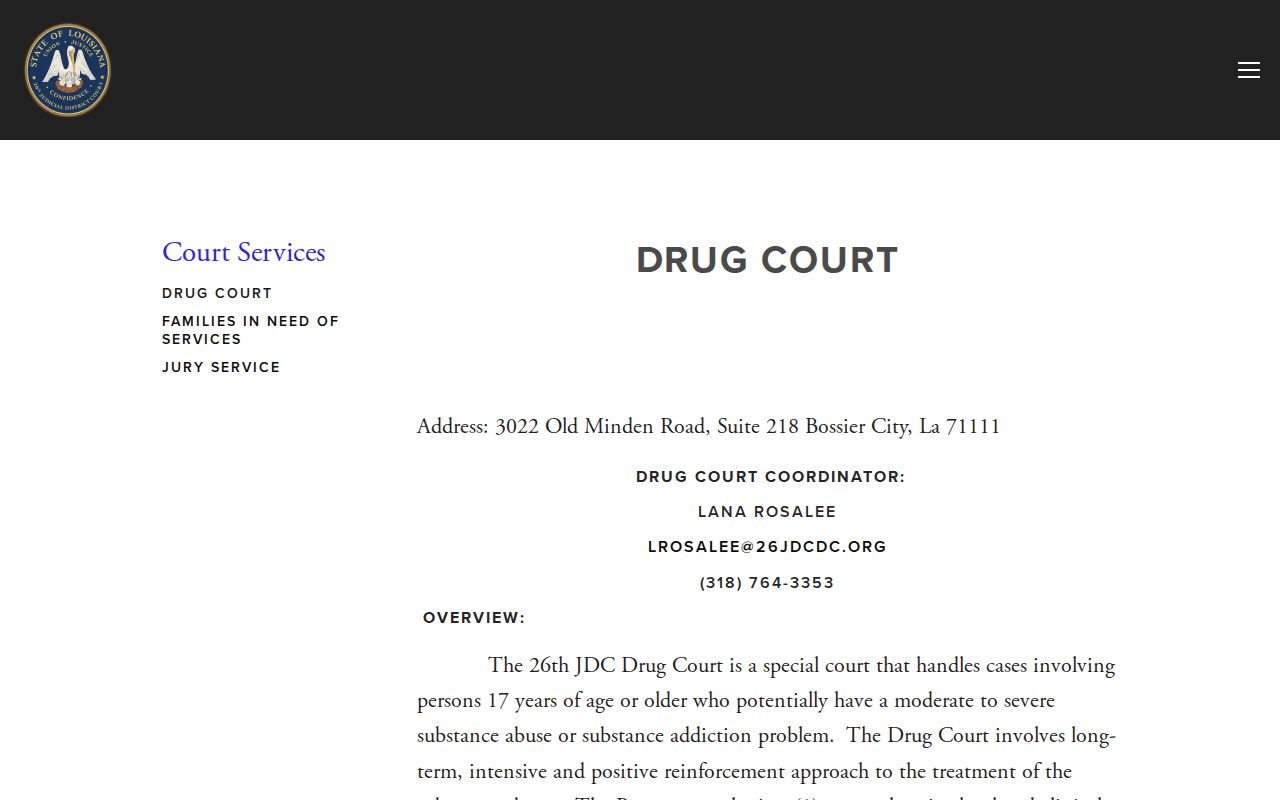
The 26th JDC Drug Court is a district-wide specialty program at 3022 Old Minden Road, Suite 218, Bossier City. Its location is not the Webster Parish courthouse record counter.
The Webster Parish Clerk remains the source for the public case file. A drug-court reference in minutes is one part of that history, not a substitute for judgment.
Older and Federal Case Records
For a Webster Parish case older than the form's ten-year span, ask the Criminal Department what archive or index is available and what plain or certified copies cost. Do not apply the civil department's posted fee schedule to criminal files without confirmation.
Federal matters belong to the Western District of Louisiana and its PACER dockets. Appeals also sit outside the Webster clerk's trial file. Route each search by court instead of expecting one statewide index.
City-court matters need the same care. Minden City Court and Springhill City Court keep their own limited-jurisdiction records and contacts. A citation should name the issuing court, which is often the best routing clue. If the citation points to a city court, begin there rather than assuming the 26th JDC clerk has the file. If it points to district court, use the Webster Parish clerk and the district docket channels.
Case Record Access & Restrictions
Juvenile matters are generally confidential. Sealed and expunged files are restricted, and victim, witness, security, and private data may be withheld or redacted. Louisiana expungement removes qualifying material from public access; it does not destroy the record.
Under the law-enforcement records exception, an initial report, booking record, citation, and filed bill of information can be public while follow-up investigative material remains withheld. Ask for segregable public parts when only some content is protected.
Note: A court search proves a filing and its recorded outcome, not a complete statewide criminal-history record.