
Sex Offender Checks in Webster Parish
The Louisiana State Police registry entry page is the primary official starting point. Louisiana State Police BCII maintains the State Sex Offender and Child Predator Registry, while local agencies collect and forward required registration information. Searchers should enter the official portal through LSP because the live search is vendor-hosted. A result should be matched with care, using the photograph, aliases, physical description, address, and conviction information rather than a name alone.
The Webster Parish Sheriff's Office has the local parish role because Louisiana registration begins with the sheriff of each parish of residence. A person living within a municipality that has a police department also has municipal reporting duties. The registry may change after a move, renewal, court action, or agency update, so the displayed record is a point-in-time safety resource. It does not replace the clerk's court file or an official fingerprint-based self-review.
Webster Registry Is Not a Rap Sheet
A Webster Parish registry profile answers a narrow question: whether a person is subject to Louisiana sex-offender or child-predator registration and what public registration facts apply. It does not list every arrest, every charge, or every court outcome. Louisiana's statewide LACCH criminal-history system is separate, and the general public does not have an unrestricted name-based portal for it.
That boundary prevents a common mistake. An absent registry result does not prove that a person has no criminal record, and a listed profile should not be read as a full account of the underlying prosecution. For the court's exact disposition, use the Webster Parish Clerk of Court record. For one's own statewide fingerprint history, use the Louisiana Right to Review process.
Note: Registry status and probation or parole supervision are separate; DPS&C warns that its supervised population is only a fraction of all registrants.
How to Search the State Registry
Open the official LSP gateway and proceed to the current search interface. The portal's controls can change, so follow the labels displayed during the live session rather than assuming that a statutory profile field is also a search field. The safe workflow is simple:
- Enter through the Louisiana State Police registry page and read the current conditions of use.
- Use the location or name controls the live portal actually offers, narrowing to Webster Parish when available.
- Compare the returned photograph, aliases, physical traits, address, and offense facts before identifying a match.
- Open the profile, note its status and update information, then verify unresolved concerns with the sheriff rather than confronting anyone.
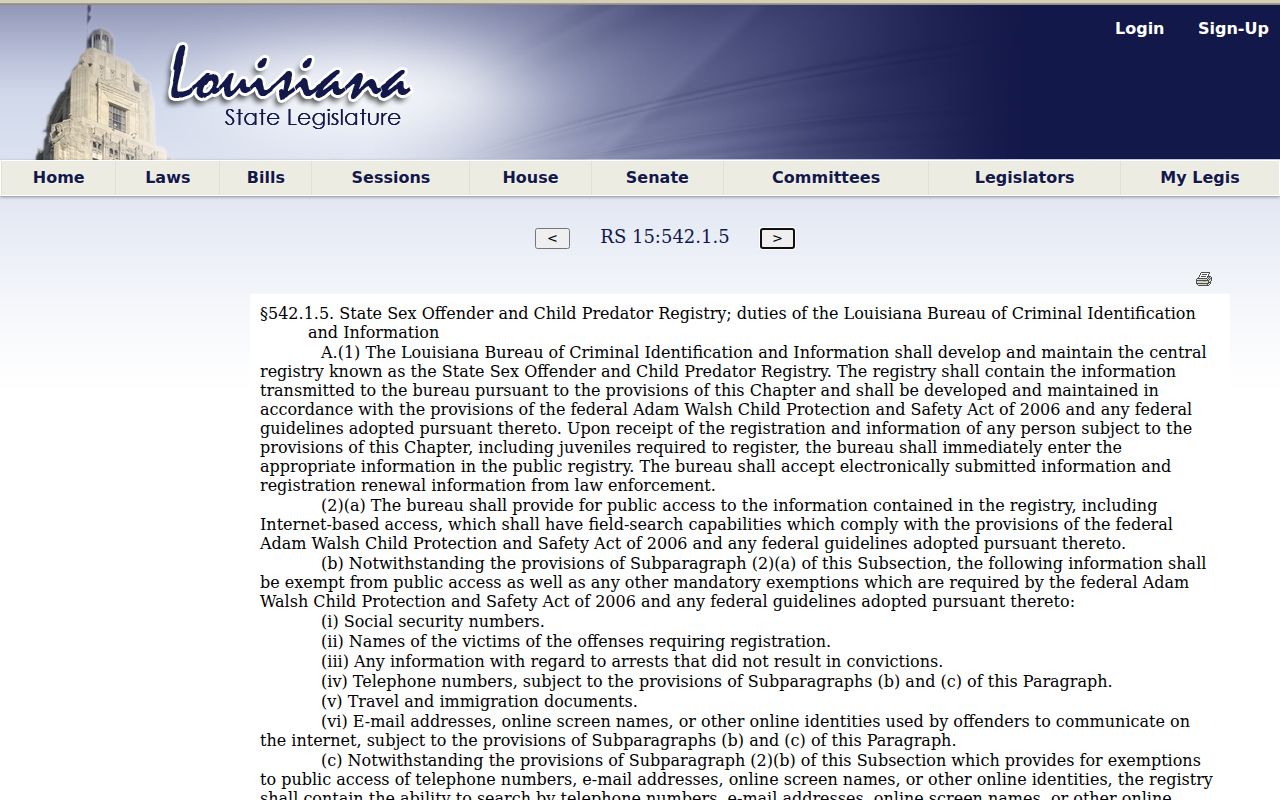
The research confirmed a separate reverse lookup required by Louisiana law. It can check whether a telephone number, email address, screen name, or other online identity is linked to a registrant without revealing that person's name through the reverse-search result.
| Field Label | Type | Required | Notes |
|---|---|---|---|
| Live portal controls | Dynamic search | Check current screen | Exact name, place, radius, map, and alert labels were not verified and must not be assumed. |
| Telephone number | Reverse lookup | One identifier | Returns whether the number is linked, without naming the registrant in that search. |
| Email address | Reverse lookup | One identifier | Statutorily required reverse-search category. |
| Screen name or online identity | Reverse lookup | One identifier | Checks an online identifier while protecting identity in the reverse result. |
The registry-content and reverse-lookup statute supports these identifier categories. It does not justify inventing live buttons or filters that were not visible during research.
The official LSP entry page shown in the manifest illustrates the proper government route into the system.
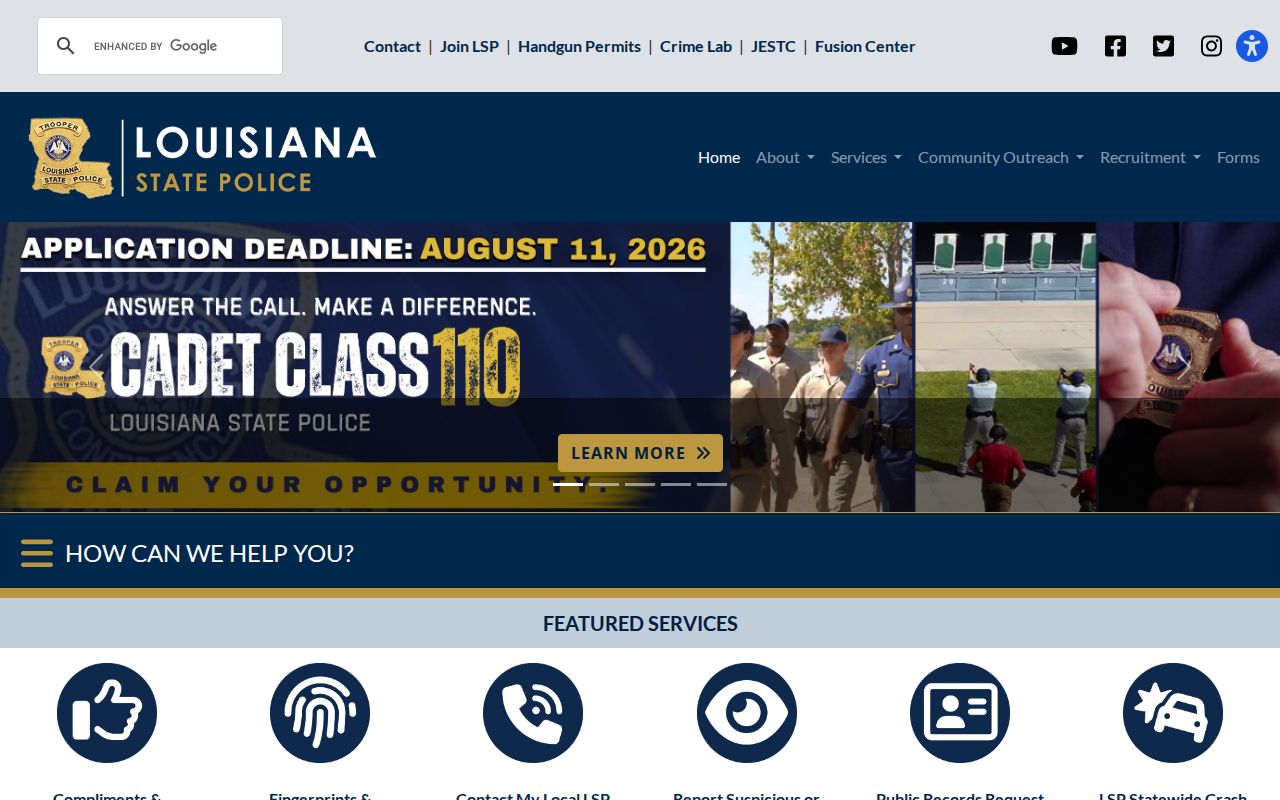
Entering through LSP helps distinguish the official vendor-hosted search from unrelated commercial people-search pages.
Webster Parish Registration Starts Locally
Louisiana law generally requires in-person registration with the sheriff in each parish of residence within three business days of establishing residence or another triggering event. Municipal residents also have duties with the police department where required. The sheriff forwards renewal and registration data to BCII, creating the link between the local record and the central registry.
Law enforcement must send fingerprints, registration information, criminal history, and the text of the offense law to BCII within three business days for inclusion. That flow explains why courts, corrections offices, the Webster Parish Sheriff, and municipal police all affect a single registry entry. It also explains why a recent move or court change may require local verification before the public profile catches up.
Inside a Registry Profile
Louisiana law supports a detailed registry record. Public presentation can include identity, location, conviction, and registration facts, while some internet identifiers are protected from ordinary display and handled through reverse search. Read every field together. A single address or alias does not provide the same assurance as a full profile match.
| Name & Aliases | Legal name and known aliases used to distinguish records. |
|---|---|
| Photo & Physical Description | A current photograph and identifying physical traits. |
| Residential Information | Residence information required for registration and public notice. |
| Offense & Conviction | Qualifying conviction and offense information reported to the registry. |
| Work, School & Vehicles | Employment, school, and vehicle information where the law applies. |
| Other Identifiers | Fingerprints and travel or immigration documents may be held; online identities are protected from ordinary display but reverse-searchable. |
The DPS&C registry gateway provides another official route and explains the distinct role of supervision. The source image below documents that state channel.
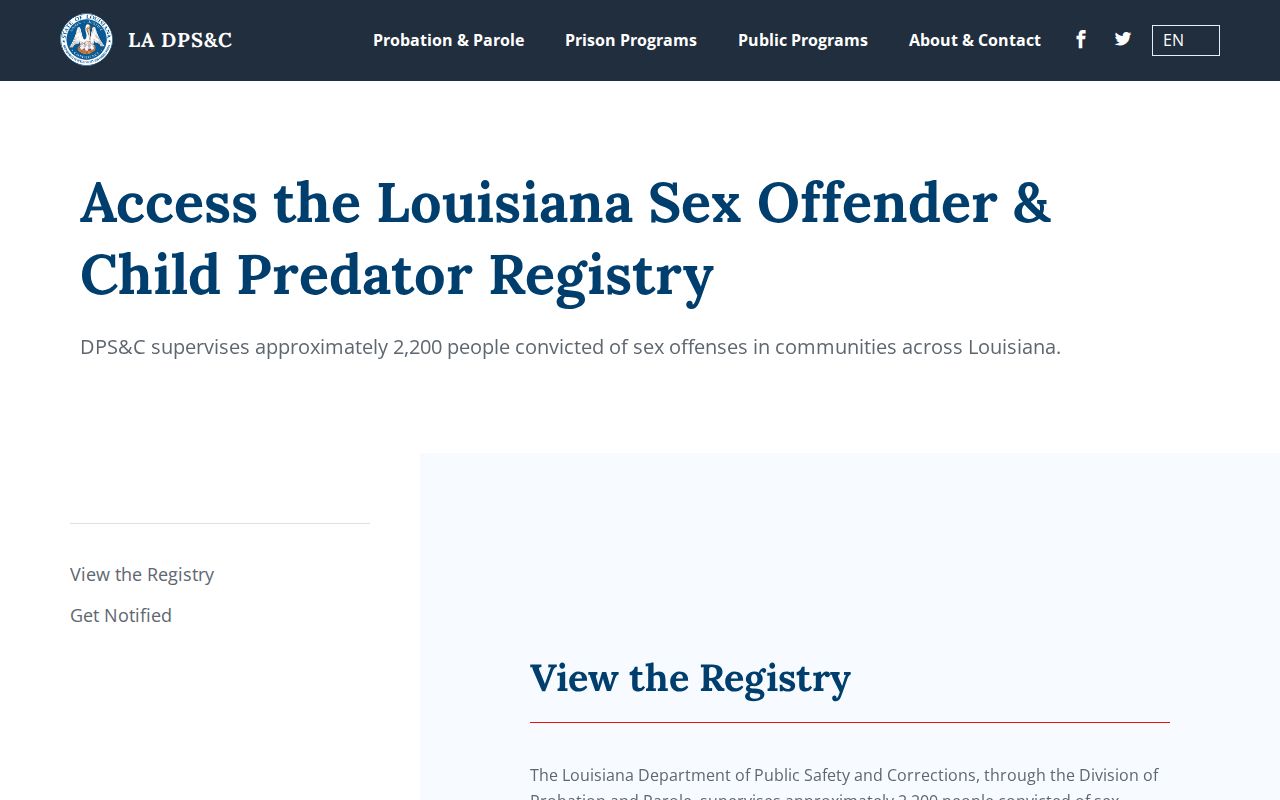
The gateway points users toward the registry but does not turn a registry profile into a prison or probation record.
Webster Searches Across State Lines
The National Sex Offender Public Website provides an official cross-state layer. It is useful when an address change, travel, or prior residence may cross Louisiana's borders. NSOPW supplements the Louisiana registry rather than replacing it, and any result should still be read through the originating jurisdiction's official profile.
The manifest's NSOPW capture shows the federal search entry without centering a private registrant.
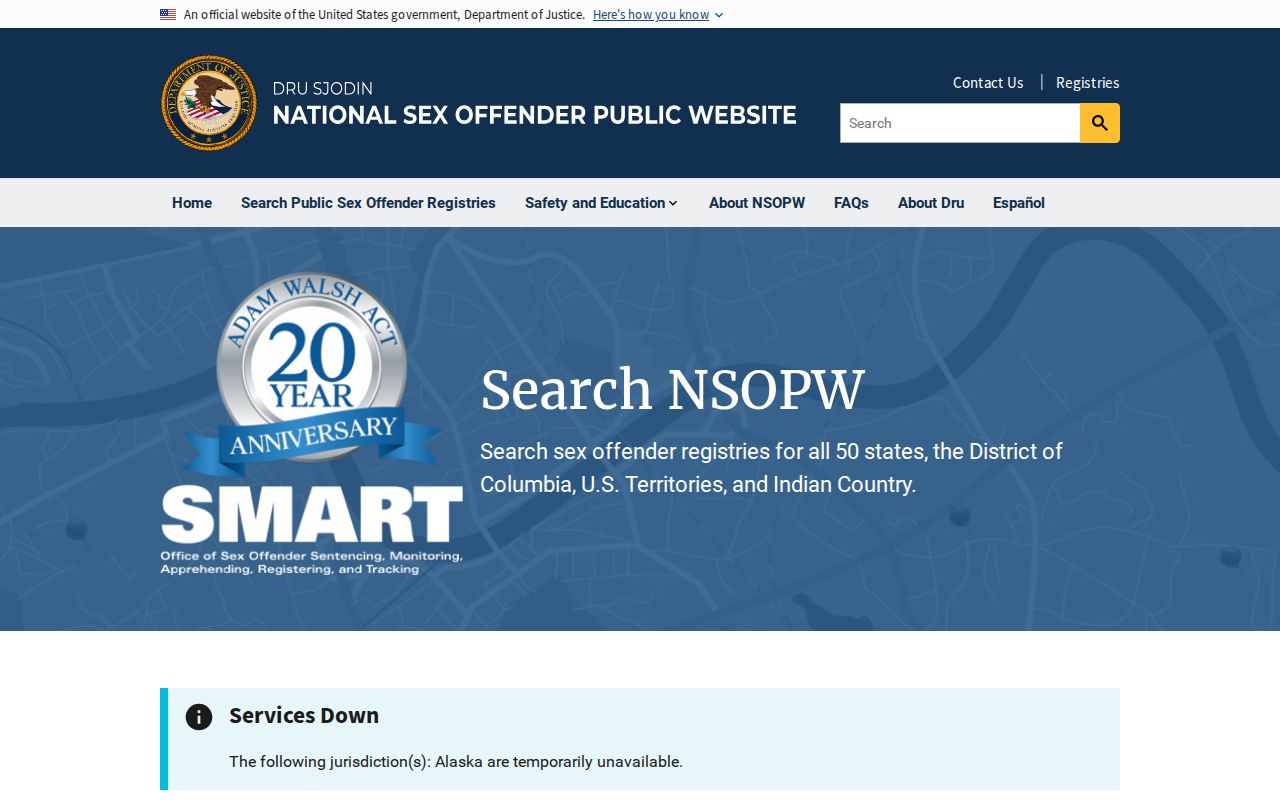
Using both official layers is more reliable than assuming a Webster Parish-only query will show registration facts held in another state.
Louisiana Registration Levels and Requirements
Louisiana does not use a simple public low, medium, and high risk label as its main duration rule. R.S. 15:544 ties the registration period to the offense category and history. Durations may be 15 years, 25 years, or life, and any clean-record reduction is conditional. Renewal frequency follows a separate statutory schedule.
| Level / Tier | Duration | Verification Frequency |
|---|---|---|
| Offense/category based | 15 years | Annual for other registrants, unless another category controls |
| Offense/category based | 25 years | Every six months for a sexual offense against a minor |
| Offense/history based | Life | Every three months for aggravated offenses or a later registerable conviction |
The renewal statute controls the three-month, six-month, and annual schedules. Duration and renewal are not interchangeable. A person may have a long registration period but a renewal cycle set by a different statutory category.
The manifest includes the official renewal-law view used for this distinction.
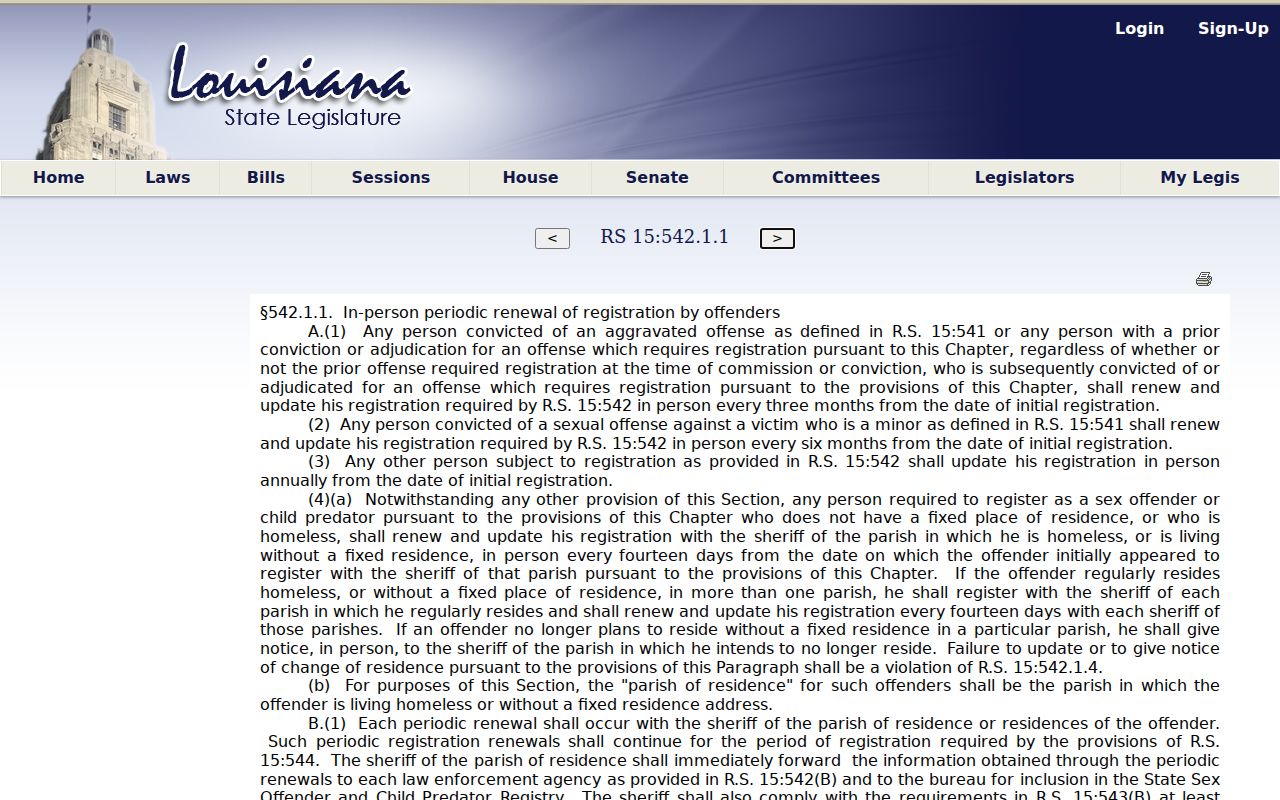
The statute, rather than a generic federal tier chart, is the right source for Louisiana renewal duties.
Report Webster Noncompliance Safely
Failure to register, update information, renew, prove residence, or provide required community notice can be a separate crime under R.S. 15:542.1.4. Suspected noncompliance should go to the Webster Parish Sheriff or the relevant municipal police department. Do not investigate at a residence or confront a listed person.
A search miss can have several causes: spelling, geography, a recent move, data timing, or a record held by another state. Recheck the live Louisiana portal, try NSOPW, and provide the official agency with the specific fact that created concern. The agency can assess compliance using nonpublic records that a public searcher cannot see.
Community Notification and Lawful Use
Registry information supports personal, family, and community safety. Louisiana law also requires forms of community notice from registrants and gives law enforcement defined reporting duties. A public listing is not an invitation to punish, shame, threaten, or monitor a household. Use it to make calm safety plans and send credible compliance questions to law enforcement.
The official statute image from the manifest documents both registry contents and the special reverse-lookup rule.
That legal framework protects public access while setting firm boundaries around the information and its use.
Use registry information lawfully: Never harass, threaten, intimidate, discriminate against, or take vigilante action against a registrant or household. Report safety or compliance concerns to law enforcement.